MRI

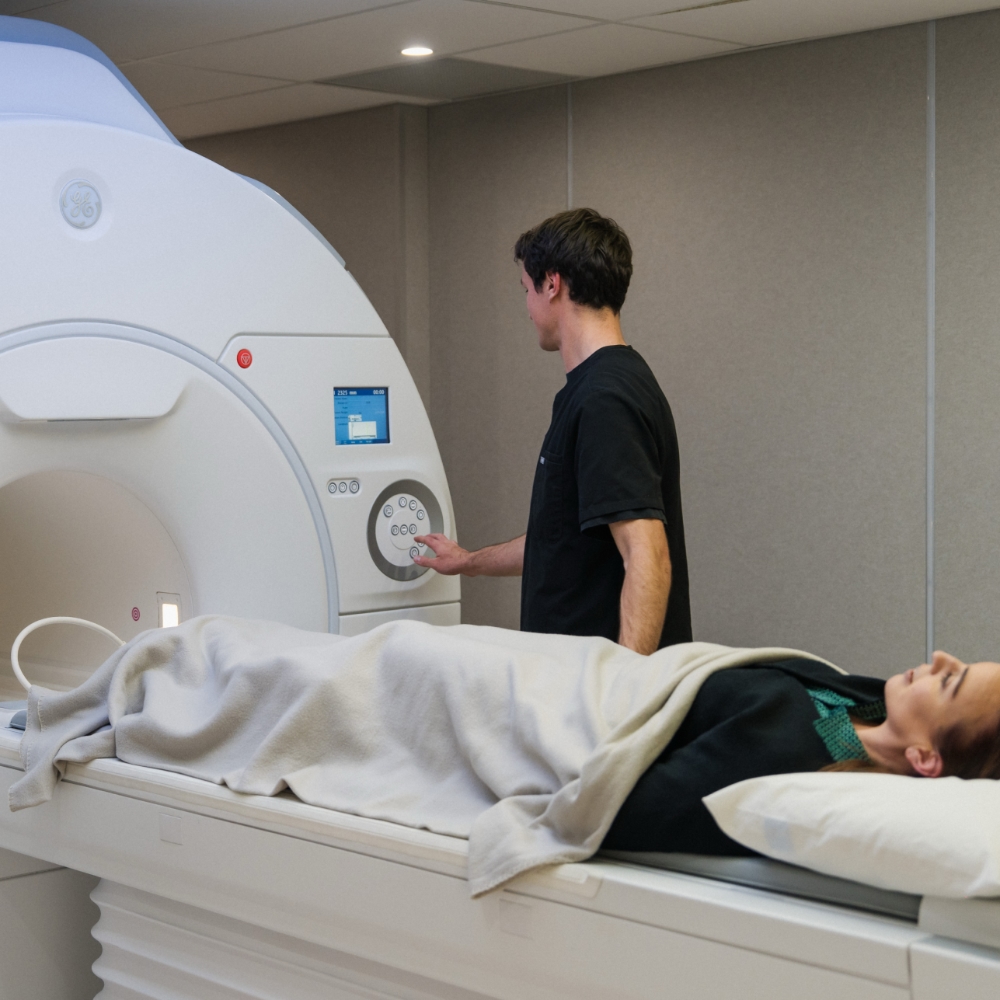
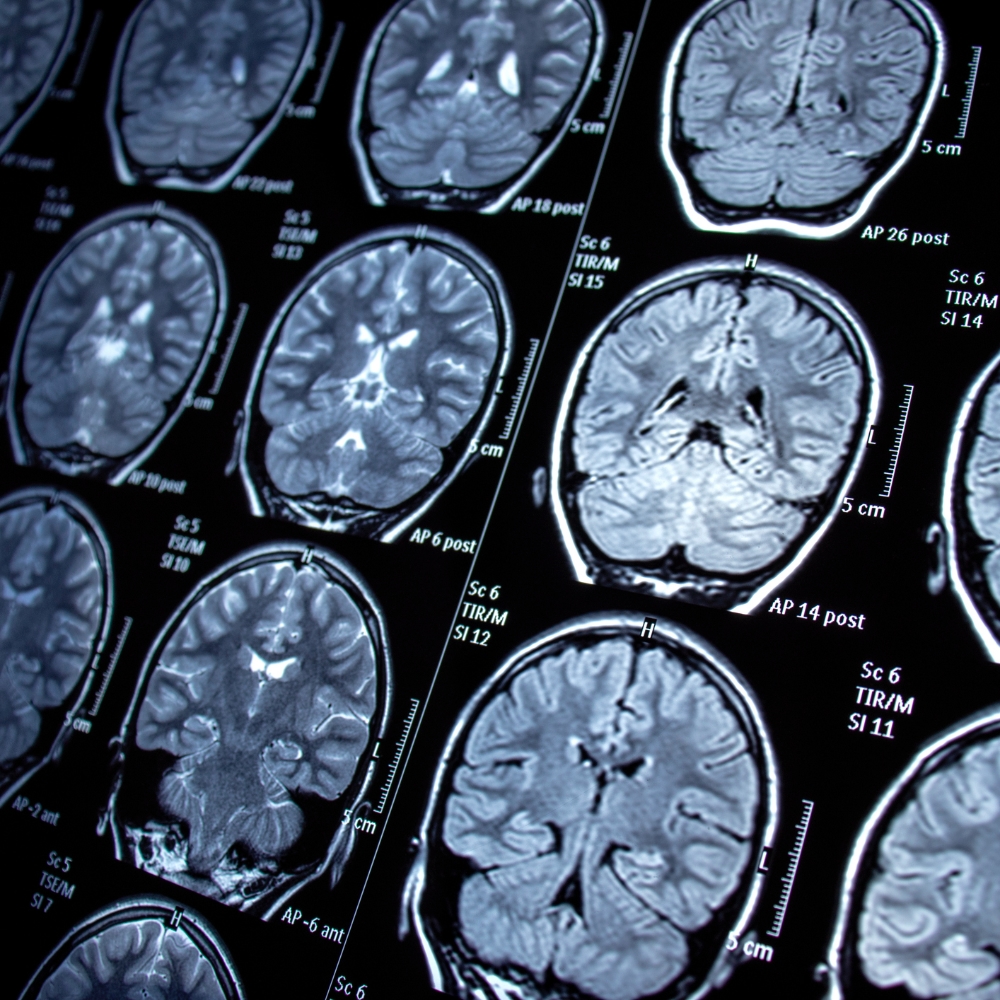
A general Magnetic Resonance Imaging (MRI) scan is a non-invasive imaging technique that provides detailed, high-resolution images of the body’s internal structures, including the brain, spine, joints, and soft tissues. It helps diagnose conditions like injuries, infections, tumours, and neurological disorders. Using powerful magnets and radio waves, MRI offers clear, accurate results without radiation.

What to Expect

A Magnetic Resonance Imaging (MRI) scan is a medical imaging technique used to create detailed pictures of the inside of your body. MRI uses strong magnets, radio waves, and a computer to generate images of your organs, soft tissues, and bones.
MRI Procedures

General MRI

A general Magnetic Resonance Imaging (MRI) scan is a non-invasive imaging technique that provides detailed, high-resolution images of the body’s internal structures, including the brain, spine, joints, and soft tissues. It helps diagnose conditions like injuries, infections, tumours, and neurological disorders. Using powerful magnets and radio waves, MRI offers clear, accurate results without radiation.

What is an MRI?
A Magnetic Resonance Imaging (MRI) scan is a medical imaging technique used to create detailed pictures of the inside of your body. MRI uses strong magnets, radio waves, and a computer to generate images of your organs, soft tissues, and bones.

Preparing for Your MRI

Safety Questionnaire:

On arrival you will be asked to complete a safety questionnaire. This is to ensure it is safe for you to have the scan. You can also complete this questionnaire online prior to your appointment here.

It is not safe for certain people with metal in their bodies to have an MRI due to the strong magnetic field. Any implanted medical devices such as pacemakers, insulin pumps, brain aneurysm clips, ear implants or metallic foreign bodies may exclude a patient from having an MRI.

An MRI may be unsuited to those that suffer from any of the following:

  • Claustrophobia or anxiety about being in small, enclosed spaces
  • Kidney problems (in case of contrast material use)
  • Allergies, especially to contrast dye (if it will be used)

Clothing:
You will be asked to change into a gown and remove all jewellery, hairpins, and any metal objects before entering the MRI room. This includes credit cards, watches, and hearing aids. You will be asked to leave your belongings in a secure area. Underpants and socks may be worn.

What Happens During the MRI?

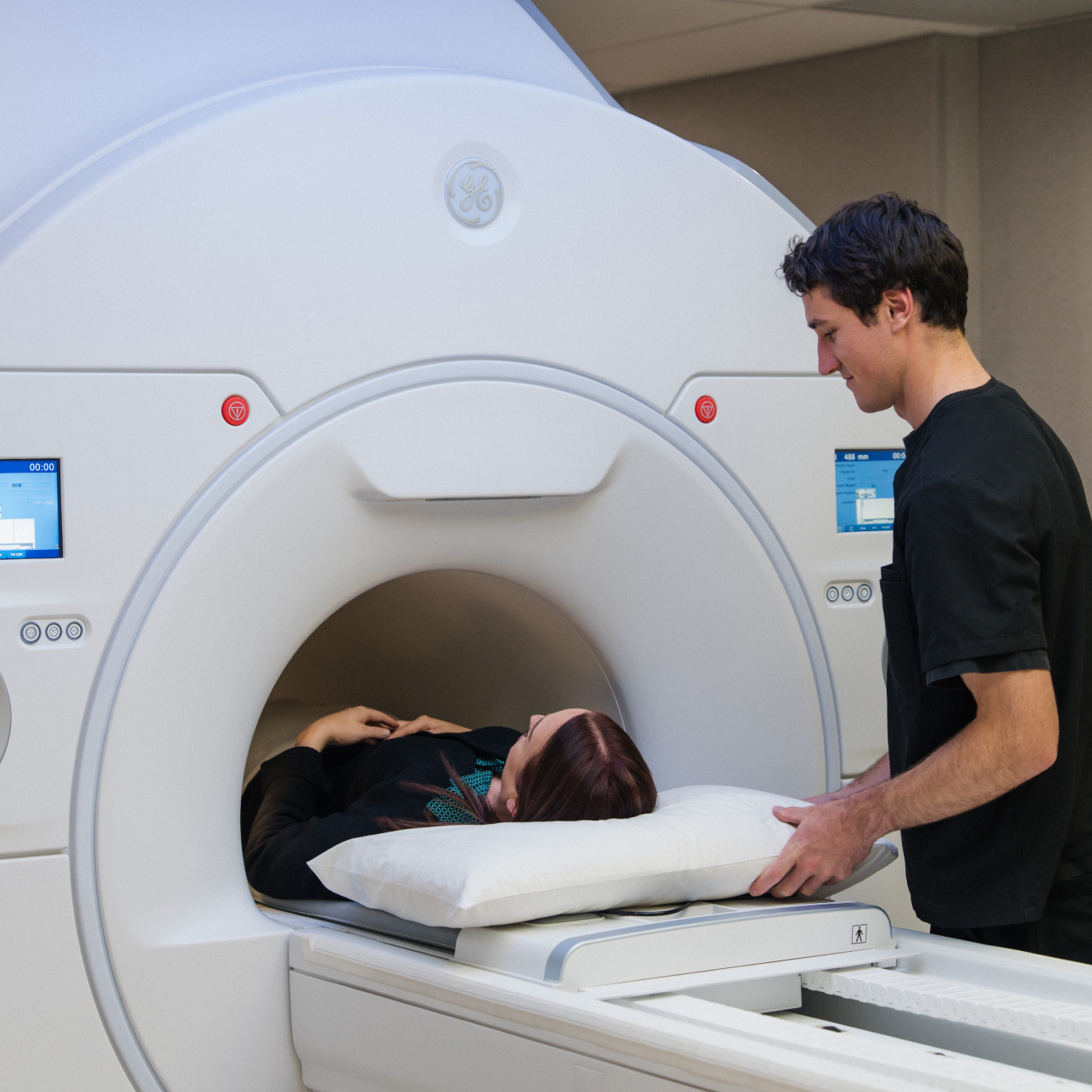
  1. Positioning: You will be asked to lie down on a movable table that slides into the MRI machine. The area of your body being scanned will be positioned in the centre of the machine.
  2. Procedure: The MRI machine makes loud noises during the scan. It is important to stay still during the procedure to ensure clear images. You will be given earplugs or headphones to help block the noise. You will also be given a call buzzer to gain the attention of the MRI radiographer at any time.
  3. Contrast Dye: In some cases, a special dye (contrast material) may be injected into a vein in your arm to improve the images. This helps highlight specific areas in the body.

How Long Does the MRI Take?
An MRI typically lasts 20 to 45 minutes, depending on the area being scanned. Some scans may take longer, especially if contrast dye is used.

After the MRI

  • If contrast dye was used, you may be asked to drink plenty of fluids to help flush it from your system.

Is the MRI Safe?
MRI is generally very safe. It doesn’t use radiation, unlike X-rays or CT scans. However, the strong magnets can interact with certain metals, which is why it’s important to disclose any medical implants or devices you may have. Pregnant women should avoid MRI in the first trimester unless absolutely necessary.

Prostate MRI is a non-invasive imaging procedure used to assess the prostate gland for conditions such as cancer, benign enlargement, or inflammation. It provides detailed images to help guide diagnosis and treatment planning. Using advanced MRI technology, this procedure offers high-resolution images without radiation, ensuring accurate results.

What is a Prostate MRI?

A Prostate Magnetic Resonance Imaging (MRI) scan is a medical imaging technique used to create detailed pictures of the prostate. MRI uses strong magnets, radio waves, and a computer to generate these images.

It helps doctors diagnose, evaluate, and monitor prostate conditions, including prostate cancer.

Why Do I Need a Prostate MRI?

The most common cancer to affect males is prostate cancer. MRI can be used to:

  • Detect prostate cancer: MRI can help detect the size, location and grade of prostate tumours.
  • Guiding biopsies: If needed, MRI can help guide a biopsy (tissue sample) location.
  • Evaluation of prostate cancer: MRI can evaluate location, grade, size and lymph node involvement of biopsy proven prostate cancer. This aids management decisions.
  • Monitoring prostate conditions: It can be used to track the progression of prostate cancer or other conditions, such as an enlarged prostate or prostatitis.
  • Assessing treatment effectiveness: It helps doctors evaluate how well treatments (such as surgery or radiation) are working.

Preparation for the Procedure:

Preparation:

  • We ask that you eat a light diet 24 hours before your prostate exam. This means
  • avoiding heavy foods or highly spiced foods that can cause digestive disturbances. Please fast for 4 hours prior to your exam.
  • Arrive 40 minutes before your examination to allow for the pre-scan procedure.
  • Prostate MRI image quality is very dependent on patients having both an empty bowel and bladder. Our staff will ask you to empty your bowel and bladder prior to the exam.

Safety Questionnaire:

On arrival you will be asked to complete a safety questionnaire. This is to ensure it is safe for you to have the scan. You can also complete this questionnaire online prior to your appointment here.

It is not safe for certain people with metal in their bodies to have an MRI due to the strong magnetic field. Any implanted medical devices such as pacemakers, insulin pumps, brain aneurysm clips, ear implants or metallic foreign bodies may exclude a patient from having an MRI.

Clothing:
You will be asked to change into a gown and remove all jewellery, hairpins, and any metal objects before entering the MRI room. This includes credit cards, watches, and hearing aids. You will be asked to leave your belongings in a secure area. Underpants and socks may be worn.

Contrast Dye:

A contrast dye and a small bowel muscle relaxant will be administered via an intravenous cannula inserted into you. This stops the bowel moving for 15-minutes during the exam and allows visualisation of the prostate.

What to Expect During the Procedure:

  1. You will lie down on an examination table that slides into the MRI machine. The table may move slightly during the test, and you may be asked to stay very still.
  2. The MRI machine will make a loud banging or thumping noise during the scan. You will be given earplugs or headphones.
  3. The procedure usually lasts 30 minutes. It’s important to remain still for the best image quality.

After the MRI:

  • If you had contrast dye, you may be advised to drink plenty of fluids to help flush it from your system.

Is the prostate MRI Safe?
MRI is generally very safe. It doesn’t use radiation, unlike X-rays or CT scans. However, the strong magnets can interact with certain metals, which is why it’s important to disclose any medical implants or devices you may have.

Contrast Dye Reactions:

Rarely, people may have an allergic reaction to the contrast dye. Inform your doctor if you have any known allergies, particularly to iodine or shellfish.

Cardiac MRI is a non-invasive imaging technique used to assess the heart’s structure and function. It provides detailed images of the heart muscle, blood vessels, and valves. It is the best test (gold standard) for many cardiac conditions.

Why is it done?

Your doctor may request a Cardiac MRI to:

  • Assess heart structure and function
  • Evaluate congenital heart disease
  • Detect inflammation or damage to the heart muscle
  • Check for scar tissue from a heart attack
  • Monitor heart disease or response to treatment

How do I prepare?

Before the Scan:

  • Clothing: You will be asked to change into a hospital gown.
  • Metal and Electronics: Do not bring any metal items, such as jewellery or watches. Inform staff if you have any metal implants (pacemaker, defibrillator, cochlear implant, surgical clips, etc.).
  • Claustrophobia: Let your doctor or MRI technologist know if you are uncomfortable in confined spaces.

What happens during the scan?

  • You will lie on a flat table that slides into the MRI machine.
  • ECG leads will be placed on your chest to monitor your heart rhythm.
  • The scan typically takes 30–90 minutes.
  • You may receive a contrast agent (gadolinium) through an IV to enhance image quality.
  • You must lie very still, and you may be asked to hold your breath briefly during certain scans.
  • You will hear loud tapping or thumping noises from the MRI machine; earplugs or headphones will be provided.

After the Scan

  • Book a follow up appointment with your referring doctor to discuss the results.

Risks and Safety

  • MRI does not use radiation.
  • Gadolinium contrast is generally safe but may rarely cause allergic reactions or complications in patients with kidney disease.
  • Not suitable for patients with certain implants (e.g., some pacemakers or metal fragments).

An MRI of the rectum is a specialised imaging procedure used to evaluate the function and structure of the rectum and pelvic floor. It is commonly used to diagnose conditions such as rectal prolapse, incontinence, or pelvic floor dysfunction. This non-invasive procedure uses MRI technology to provide detailed, high-resolution images, aiding in accurate diagnosis and treatment planning.

Overview:

How do I prepare?

Before the scan

  • MRI safety questionnaire: You will be asked to fill out an MRI safety form. You can complete this online in advance of your scan, or in person on the day of your scan. 
  • Bowel Preparation: You may be asked to take an enema the night before or the morning of the scan to empty the rectum.
  • Clothing and Personal Items: Wear comfortable clothing without metal (zippers, buttons, underwire). Remove all metal objects (jewelry, watches, hairpins, dentures, hearing aids).

What Happens During the Scan?

On arrival:

  • You may be asked to change into a hospital gown.
  • A small tube may be placed in your rectum to introduce a gel or air to improve image quality. This will give you the feeling of needing to go to the toilet.

In the MRI Scanner:

  • The team will thoroughly explain to you at what point you are required to start emptying the gel. During the scan you will be alone in the room. You will be given headphones to hear all instructions and will have a buzzer in your hand to alert the radiographers if the need arises.
  • You will lie on a table that slides into the MRI machine.
  • You must lie very still. You will hear loud tapping or knocking noises
  • The scan usually takes 30 to 40 minutes.

After the MRI

  • If you had rectal gel, you may feel the urge to use the restroom afterward.

Important Notes

  • Please inform us before the scan if you:
  • Are pregnant or think you might be.
  • Have kidney problems (a contrast agent may be used).
  • Have any metal implants or medical devices.

An MRI of the rectum is a specialised imaging procedure used to evaluate the function and structure of the rectum and pelvic floor. It is commonly used to diagnose conditions such as rectal prolapse, incontinence, or pelvic floor dysfunction. This non-invasive procedure uses MRI technology to provide detailed, high-resolution images, aiding in accurate diagnosis and treatment planning.

Overview

What is a pelvic MRI?

A pelvic MRI acquires detailed images of organs and structures in the pelvic area. The test is safe, painless and does not use radiation. A pelvic MRI can be used to evaluate the uterus, ovaries and their surrounding tissues and structures. 

Safety Questionnaire:

On arrival you will be asked to complete a safety questionnaire. This is to ensure it is safe for you to have the scan. You can also complete this questionnaire online prior to your appointment here.

It is not safe for certain people with metal in their bodies to have an MRI due to the strong magnetic field. Any implanted medical devices such as pacemakers, insulin pumps, brain aneurysm clips, ear implants or metallic foreign bodies may exclude a patient from having an MRI. 

Clothing:
You will be asked to change into a gown and remove all jewellery, hairpins, and any metal objects before entering the MRI room. This includes credit cards, watches, and hearing aids. You will be asked to leave your belongings in a secure area. Underpants and socks may be worn.

What to Expect During the Procedure

  1. You will lie down on an examination table that slides into the MRI machine. The table may move slightly during the test, and you may be asked to stay very still.
  2. The MRI machine will make a loud banging or thumping noise during the scan. You will be given earplugs or headphones.
  3. The procedure usually lasts 30 minutes. It’s important to remain still for the best image quality.

After the MRI

If you had contrast dye, you may be advised to drink plenty of fluids to help flush it from your system.

Is the MRI Safe?

MRI is generally very safe. It doesn’t use radiation, unlike X-rays or CT scans. However, the strong magnets can interact with certain metals, which is why it’s important to disclose any medical implants or devices you may have. 

Contrast Dye Reactions:

Rarely, people may have an allergic reaction to the contrast dye. Inform your doctor if you have any known allergies, particularly to iodine or shellfish.

An MRI arthrogram is an advanced imaging procedure used to evaluate joint abnormalities such as tears, inflammation, or cartilage damage. It involves injecting a contrast dye into the joint, followed by an MRI scan to provide detailed images of the joint’s structure. This procedure is commonly used for shoulder, hip, and knee evaluations.

Overview: 

What is an MRI Arthrogram?

An MRI arthrogram is a special type of MRI (Magnetic Resonance Imaging) that is used to take detailed pictures of the inside of a joint. Unlike a regular MRI, an MRI arthrogram involves injecting a contrast dye into the joint before the scan. This dye helps to highlight areas within the joint and allows for a clearer and more detailed view of the cartilage, ligaments, tendons, and other structures.

Common Joints for MRI Arthrograms:

  • Shoulder
  • Hip
  • Knee
  • Wrist
  • Ankle

Why is an MRI Arthrogram Performed?

An MRI arthrogram is typically recommended when:

  • A standard MRI does not provide enough detail.
  • You have joint pain, injury, or stiffness that cannot be explained by physical exams or standard imaging.
  • Your doctor suspects tears in the cartilage, ligaments, or other internal joint structures.
  • Conditions like labral tears, rotator cuff injuries, or cartilage damage are suspected.

Before the Procedure

Preparation:

  • No food or drink: You may be instructed to refrain from eating or drinking for several hours before the procedure. Follow the specific instructions given by your doctor.
  • Medications: Let your doctor know if you are taking any medications, especially blood thinners or pain relievers.
  • Allergies: Inform your doctor if you have any allergies, especially to contrast dyes, iodine, or latex.
  • Pregnancy: Inform the radiology team if you are pregnant or suspect you may be.

What to Wear:

  • You will be asked to change into a gown for the procedure.
  • Please remove any metal

What to Bring:

  • Insurance card (if applicable)
  • Referral or doctor’s order (if provided by your doctor)

During the Procedure

Step 1: Injection of Contrast Dye

  • A local anaesthetic will be applied to numb the skin around the joint.
  • A needle will be inserted into the joint to inject a contrast dye (commonly gadolinium or a mixture of saline and iodine). This helps to improve the quality of the MRI images.
  • You may feel slight pressure or discomfort during the injection, but it should not be painful.

Step 2: MRI Scan

  • After the injection, you will lie on an MRI table and be positioned so that the joint is properly aligned.
  • The MRI machine will take images of the joint, which typically takes between 30 to 60 minutes. You may be asked to move the joint into different positions during the scan to get clear images from various angles.
  • The MRI machine is loud, but you will be provided with earplugs or headphones for your comfort.

After the Procedure

  • Post-Injection Care: You may experience some mild pain, swelling, or bruising around the injection site. Applying ice to the area can help reduce discomfort.

  • Activity Restrictions: Avoid strenuous activities or heavy lifting for 24-48 hours after the procedure.

  • Follow-Up: Your doctor will discuss the results of the MRI with you at a follow-up appointment. In some cases, the doctor may schedule additional imaging or recommend treatment based on the findings.

When to Contact Your Doctor

  • Increased pain or swelling at the injection site.
  • Signs of infection (e.g., redness, warmth, fever).
  • Severe dizziness or a reaction to the contrast dye.

Possible Risks and Complications

Although MRI arthrograms are generally safe, there are some risks to be aware of:

  • Infection: As with any injection, there is a slight risk of infection at the needle insertion site.
  • Allergic Reaction: Some people may have an allergic reaction to the contrast dye, although this is rare.
  • Bleeding: There is a minimal risk of bleeding, especially if you are on blood-thinning medications.

If you experience any severe reactions, it is important to contact your healthcare provider immediately.

An MRI enterogram is a specialised imaging test that takes detailed images of your small intestine. It helps doctors visualise inflammation, blockages or other problems in the intestines without using radiation.

Overview:

How do I prepare?

Before the scan

  • MRI safety questionnaire: You will be asked to fill out an MRI safety form. You can complete this online in advance of your scan here, or in person on the day of your scan. 
  • Do not eat anything for 6 hours, or drink anything for 4 hours before your appointment. You may take your usual medications with a small sip of water. 
  • Clothing and Personal Items: Wear comfortable clothing without metal (zippers, buttons, underwire). Remove all metal objects (jewelry, watches, hairpins, dentures, hearing aids).

What Happens During the Scan?

On Arrival:

  • You will be asked to drink about 1 to 1.5 litres of a special liquid over about 45-60 minuets before the scan. This fluid helps your small intestine be seen on the scan.
  • You may be asked to change into a hospital gown.
  • you will be asked to change into a hospital gown and to remove any jewellery, watches or metal on your body.

In the MRI Scanner:

  • You will lie on a table that slides into the large tube shaped MRI machine.
  • You must lie very still. You will hear loud tapping or knocking noises
  • You can speak to the technician through a microphone at any time. 
  • The scan usually takes 30 to 45 minutes.
  • a small injection of contrast dye may be given through an IV to enhance images. 
  • you may also receive and injection to slow down your bowel motion.

After the MRI enterogram

  • You may have mild bloating or need to use the restroom more after the test. Drink plenty of water to flush out the oral fluid. 

Are MRI Safe?

MRI is generally very safe. It doesn’t use radiation, unlike X-rays or CT scans. However, the strong magnets can interact with certain metals, which is why it’s important to disclose any medical implants or devices you may have. Pregnant women should avoid MRI in the first trimester unless absolutely necessary.

After the Exam

If contrast dye was used, you may be asked to drink plenty of fluids to help flush it from your system.

Key Features of Our Clinic

Our point of difference

All Referrals Welcome

In Australia, radiology referrals are not clinic-specific. You can use a referral made out to another clinic here.

Expert Radiologists

A study is only as good as the specialist reporting it. Our team are experienced and broadly knowledgeable radiologists with sub-specialised training.

Latest Low-Dose Technology

We have invested in the latest imaging technology to ensure our patients enjoy the safest clinical experience possible.

Fast Reporting to GPs & Specialists

Onsite Radiologists means rapid turn-around of reports, with written correspondence sent within 2–24hours.

Urgent & Emergency

Urgent appointments are always accommodated. Simply call reception.

Our Team

Meet Our Radiology Team

Dr Andrew Low

BEng, MSc, MBBS(Hons 1), FRCPC, FRANZCR

Radiologist

Dr James Bewes

BScAdv, MMedPhys, MBBS(Hons), FRANZCR

Radiologist

Questions

If you have any questions or concerns about the procedure, please feel free to contact our friendly staff.

Expert imaging. Clear answers. Compassionate care. Book your appointment today!

If you wish to make a booking or require urgent attention, please get in touch with our friendly team to make a booking.

Please Note

We are NOT open to the public yet as our clinic is still under construction. Our official opening date is scheduled to be late February 2026.